
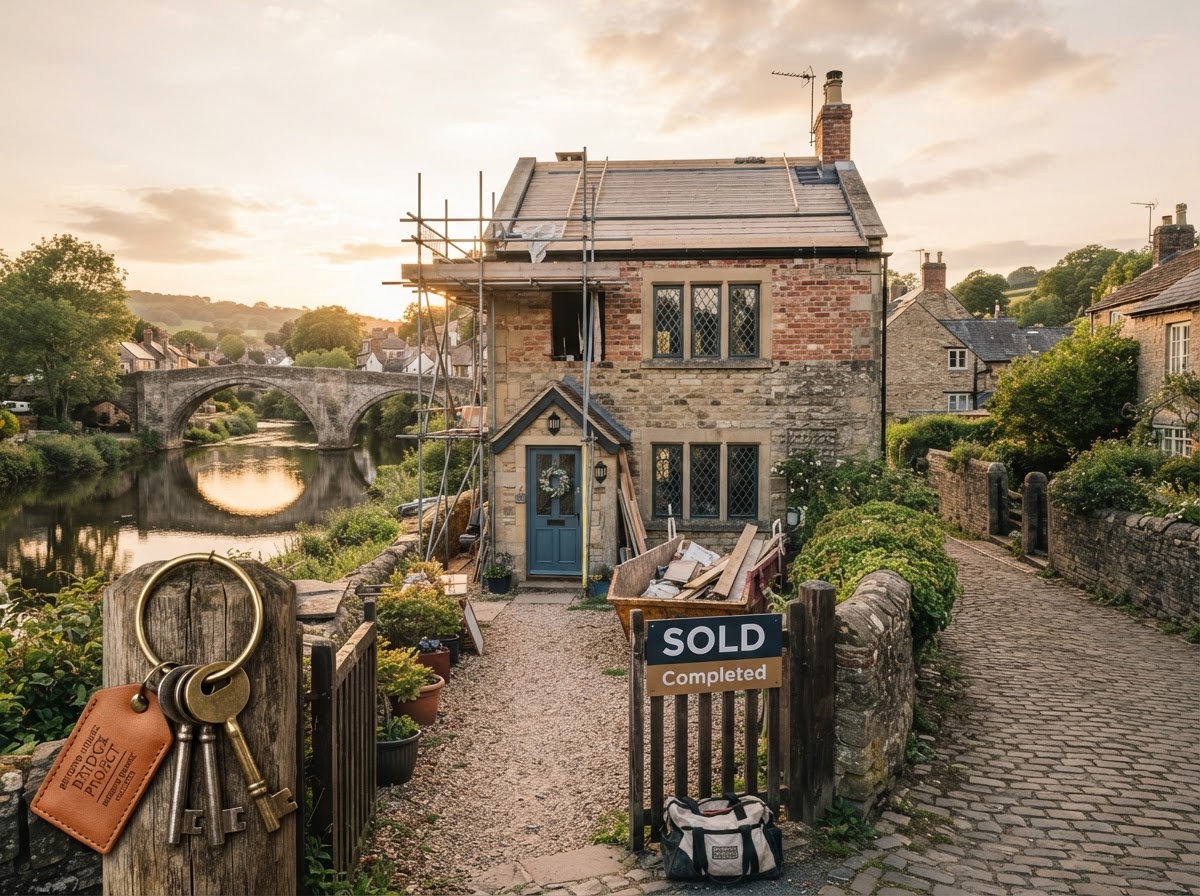
A practical guide to bridging loans — how they work, what they cost, and the property scenarios where short-term finance gives you a decisive edge.
Bridging finance is a powerful, short-term funding tool that allows property buyers and investors to act quickly when traditional mortgage timelines simply won't keep pace. Whether you are buying at auction, breaking a property chain, or purchasing an unmortgageable property to refurbish, a bridging loan can provide the fast capital you need to secure the deal.
A bridging loan is designed to 'bridge' a gap — typically between the purchase of a property and a longer-term exit, such as a sale or a refinance onto a conventional mortgage. Facilities usually run from one to twelve months, with interest often charged monthly and either serviced or rolled up to be repaid at the end of the term.
There are two main types of bridging loan: closed and open. A closed bridge has a fixed, certain exit date — for example, where a buyer has already exchanged on a sale and is simply waiting for completion. An open bridge, by contrast, has no fixed exit date and is used where the exit route is clear but the timing is not yet confirmed, such as refurbishing a property before refinancing.
Lenders will assess a bridging application primarily on the loan-to-value (LTV) ratio and the credibility of the exit strategy. Most specialist lenders will advance up to 70–75% LTV on residential property, with the value confirmed by an independent surveyor. The stronger and more demonstrable your exit, the more competitive the pricing you can access.
Costs in bridging finance typically include a monthly interest rate, an arrangement fee (often 1–2% of the loan), valuation fees, and legal costs. Because the facility is short-term, the annualised cost can appear high relative to a mortgage — but bridging should be judged on its purpose: it is a tactical tool, not a long-term hold. Used correctly, it unlocks opportunities that would otherwise be unobtainable.
One of the most common uses of bridging finance is the purchase of unmortgageable property. Standard mortgage lenders will not lend against a property without a kitchen, bathroom, or functioning heating system — but a bridging loan allows you to acquire the property, complete the works, and then refinance or sell. This is a classic route for investors looking to add value through refurbishment.
At Ascend, we specialise in arranging bridging facilities that are tailored to the specific circumstances of each deal. Our team understands the urgency that underpins bridging cases and works to deliver decisions quickly, so that you can secure opportunities without delay. If speed matters to your next transaction, speak to us about how a bridging solution could fit your strategy.
Topics covered: